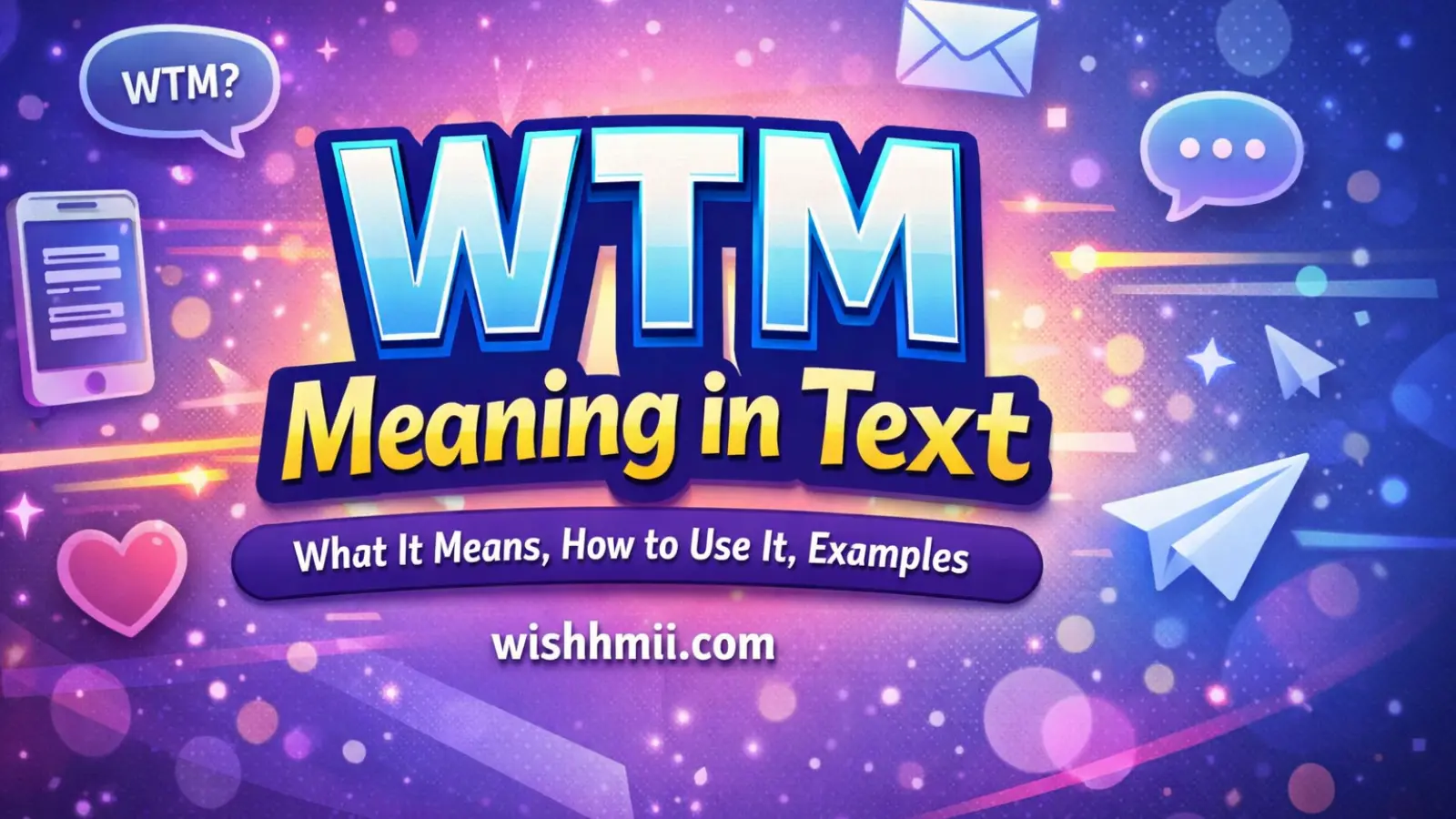
You may see WTM in a text, a group chat, or a social message. At first, it can look confusing. That is normal, especially if you do not use a lot of short chat terms.
In most casual chats, WTM is a fast way to ask what is going on or what the plan is. But it can also mean something else in the right context. That is why the same three letters can feel easy in one message and unclear in another. Live sources most often treat “what’s the move?” as the main current meaning, while also noting “what’s the matter?” and “whatever that means” as secondary uses.
This guide explains the plain meaning, tone, examples, replies, and common mistakes. It also shows when not to use it.
Quick Answer
WTM meaning in text usually means “what’s the move?” It is an informal way to ask about plans, next steps, or what is happening. In some chats, it can also mean “what’s the matter?” or “whatever that means,” depending on the tone and context.
TL;DR
• WTM usually means “what’s the move?”
• It is casual, not formal.
• Context can change the meaning.
• It often appears in texts and group chats.
• A common reply is your plan or mood.
• Do not use it in formal messages.
What WTM Means in Text
WTM is a very informal chat abbreviation. In current texting use, it most often asks about plans. A person may send it when they want to meet up, do something, or keep a conversation moving.
In plain English, WTM often means one of these:
• What is the plan?
• What are we doing?
• What is happening next?
That said, some people also use it to ask what is wrong, or to say “whatever that means” with a sarcastic tone. Context does the heavy lifting.
The Most Common Meaning: “What’s the Move?”
This is the main meaning you should know first. If someone texts “WTM tonight?”, they are usually asking what the plan is. They want to know where people are going, what happens next, or whether anyone wants to hang out.
It has a social tone. It often sounds relaxed and open. It can also feel a little spontaneous.
Examples:
• “WTM after class?”
• “It’s Friday. WTM?”
• “I’m free later. WTM?”
A common mistake is reading this as emotional concern. In many current chats, it is really about plans, not feelings.
Other Meanings of WTM
WTM does not always mean the same thing. Some live sources still list two other common meanings.
“What’s the matter?”
This use asks what is wrong. It fits when the other person seems upset, quiet, or stressed.
Examples:
• “You got quiet fast. WTM?”
• “You seem off today. WTM?”
“Whatever that means”
This use is not a real question. It is usually sarcastic or dismissive.
Examples:
• “He said he is in his ‘growth era.’ WTM.”
• “She called it a ‘soft launch.’ WTM.”
A common mistake is assuming every WTM message is friendly planning talk. Tone can shift the meaning.
How to Pronounce and Classify WTM
WTM is usually said letter by letter: double-u tee em. That is the clearest way to say it aloud. This kind of shortened form fits the broader pattern of texting abbreviations and acronyms described by dictionary and writing references.
As a language label, WTM works best as an informal texting abbreviation for a phrase. It is not usually treated like a standard noun, verb, or adjective in regular writing. Instead, it stands in for a full casual question or comment. That is why its meaning depends so much on context.
Where People Use WTM
WTM mostly appears in:
• text messages
• group chats
• Snapchat messages
• Instagram messages or comments
• casual social chats online
Live sources generally treat its meaning as similar across texting and social platforms. The app can change the vibe, but not usually the core meaning.
It is part of very informal language. Cambridge defines slang as very informal language used among people who know each other or share a group context. That fits WTM well.
How to Use WTM Naturally
Use WTM when the conversation is casual. It works best with friends, classmates, siblings, or someone you already text in a relaxed way.
Good examples:
• “WTM later?”
• “I’m done with work. WTM?”
• “WTM this weekend?”
• “You good? WTM?”
It can also sound a little flirty in the right chat:
• “You free tonight? WTM?”
• “I’m bored. WTM with you?”
Common mistake:
• Wrong: “Dear Professor, WTM about tomorrow’s assignment?”
• Better: “Hello Professor, I have a question about tomorrow’s assignment.”
How to Reply to WTM
Your reply should match the meaning. If it means plans, answer with your plan. If it means concern, answer with how you feel. Live results also support relaxed, short replies.
If it means “what’s the move?”
• “Nothing yet. You got ideas?”
• “We’re meeting at 7.”
• “Movie night. Want to come?”
If it means “what’s the matter?”
• “Just tired today.”
• “I’m okay now. Thanks.”
• “A lot is going on.”
If it means “whatever that means”
• You may not need to reply at all.
• Or you can clarify your point.
When Not to Use WTM
WTM is not a good choice for formal messages. It can look too casual, unclear, or careless in work, school, or professional writing.
Avoid it in:
• emails to teachers
• job messages
• work chat with clients
• formal applications
• academic writing
Use the full phrase instead when clarity matters.
Related Terms and Common Confusions
WTM can be confused with other chat shortcuts. The most common mix-up is with WYD. Live sources note that WTM asks about plans, while WYD asks about current activity.
| Context | Best Choice | Why |
|---|---|---|
| Asking about tonight’s plan | WTM | It asks what happens next. |
| Asking what someone is doing now | WYD | It asks about current activity. |
| General casual greeting | What’s up? | It sounds broader and simpler. |
Close equivalents for the main meaning:
• “What’s the plan?”
• “What’s going on?”
• “What are we doing?”
There is no true direct antonym for WTM. It is a shorthand question, not a regular vocabulary word.
Common Mistakes With WTM
People often make the same few mistakes with WTM. Most of them come from ignoring context.
• Assuming one meaning every time
Correction: Read the chat before and after it.
• Using it in formal writing
Correction: Use full words in school or work messages.
• Missing the tone
Correction: A sarcastic tone may mean “whatever that means.”
• Overusing slang with strangers
Correction: Keep it for casual chats unless the other person writes that way too.
Mini Quiz
1) In “It’s Saturday night, WTM?”, what does WTM most likely mean?
Answer: What’s the move?
2) In “You seem upset. WTM?”, what does WTM most likely mean?
Answer: What’s the matter?
3) In “He said he’s a ‘vision architect.’ WTM,” what does WTM most likely mean?
Answer: Whatever that means.
4) Should you use WTM in a formal email?
Answer: No.
5) Which is closer to WTM: WYD or “What’s the plan?”
Answer: “What’s the plan?”
FAQs
What does WTM mean in texting?
Most often, it means “what’s the move?” In casual chats, that means “what is the plan?” or “what are we doing?” Some sources also list other meanings, but this is the main one in current texting use.
Does WTM mean “what’s the move” or “what’s the matter”?
It can mean either one. The chat context tells you which meaning fits. If the topic is plans, it usually means “what’s the move?” If the person seems upset, it may mean “what’s the matter?”
Is WTM rude in text?
Usually, no. It is generally casual and neutral. Still, tone matters, and it can feel too blunt in the wrong conversation.
Does WTM mean the same on Snapchat?
Usually, yes. Sources generally describe the same core meanings across Snapchat, Instagram, and texting. The platform changes the style, but not the main definition.
How do you reply to WTM?
Reply with your plan, your status, or a clarifying question. For example, “Nothing yet, you?” works for planning talk. If the person means concern, answer honestly about how you feel.
Do adults use WTM or just teens?
Younger people use it more often, but adults may use it in casual chats too. It depends on texting style and comfort with slang.
Do you need a question mark after WTM?
Not always. In casual texting, punctuation is often optional. A question mark can help with clarity, but many people skip it.
Conclusion
WTM meaning in text is usually simple once you see the context. Most of the time, it means “what’s the move?”
Watch the tone, read the chat around it, and use it only in casual messages. That is the easiest way to understand it and reply with confidence.